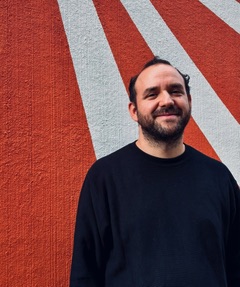
DAMIEN BOL
Sciences Po Paris
I'm a professor of political science at Sciences Po Paris, specializing in comparative political behavior. I previously held a position at King’s College London for about eight years. I received my PhD in political science from UCLouvain in 2013, followed by a three-year postdoc at the University of Montreal.
My research examines how democracy, and particularly elections, shapes citizens’ attitudes and behavior, and, in turn, how citizens view and shape democratic institutions. I have published more than 50 articles in a range of political science journals on these topics. I specialize in survey and experimental methods, with a particular focus on France, the UK, Canada, and Belgium, which are my main countries of expertise.
From January 2027, I will be Editor-in-Chief of the Journal of Experimental Political Science, managed by the American Political Science Association.
At this stage of my career, I am particularly proud of three things:
1. While I’m a political scientist by training, I frequently collaborate with economists. This led to publications in the Journal of Public Economics and other econ journals. I’m not sure economists have noticed yet that I’m not one of them.
2. My work is cited on the Wikipedia page on Democracy in several languages, including English, alongside some little-known scholars like Dahl and Przeworski.
3. One of my papers has been cited more than 1,000 times according to Google Scholar, which puts it somewhere in the top 0.01% of political science papers, according to my completely nonscientific personal calculation.
SELECTED PUBLICATIONS (LAST 3 YEARS)
(for a full list of publications, see here)
(2026) The Effect of Being a Poll Worker on Democratic Attitudes in a Post-Conflict Society: Evidence from an Experiment in Colombia. World Development.
(2026) Does Support for Democracy Increase Losers' Consent? (with André Blais and Carolina Plescia). Political Studies
(2026) What Electoral Outcomes Foster Electoral Consent/Dissent? Politics and Governance
(2026) Renewing Democracy: How Exposure to Electoral Turnovers Reinforces Citizens' Democratic Support. World Politics
(2025) Can ChatGPT Accurately Identify the Position of Parties? A Validation Study with an Expert Survey in France (with Pierre-Henri Bono). Research & Politics
(2025) Le vote stratégique dans une France multipolarisée : le cas des élections législatives de 2024 (with Jean-François Daoust). Revue Française de Science Politique
(2024) The Psychological Partisan Effect of Electoral Systems: How Ideology Correlates with Strategic Voting (with Andrew Hunter and Gabriela Aguirre Fernandez). Party Politics